- 8:00 am-4:00 pm Monday - Friday
24/7 Emergency Service Available - 107 Action Ln, Summerville, SC 29483
- actionac@hotmail.com
- 107 Action Ln, Summerville, SC 29483
- actionac@hotmail.com

Quick Quote
South Carolina is one of the most beautiful places in the United States to call home. However, our local weather can be extreme - high temps and thick humidity in the summer and chilly winter weather during cold months. As a local HVAC company in Summerville, SC, we know how crucial it is to have a quality HVAC system in your home and experienced technicians to keep it working correctly.
With more than 35 years of serving the Lowcountry, we are proud to be an active part of our local community. As your neighbors, we are here for all of your HVAC needs, whether you need a new AC unit installed this summer or a heat pump replacement this winter. With a reliable team of NATE-certified technicians and decades of experience in our industry, no HVAC project is too big or small for us to handle.
We offer highly competitive pricing and convenient financing options for all of our clients. At the end of the day, our goal is to make it easy and affordable to live comfortably in your home all year long. We are committed to hard work, honesty, and integrity with every service we offer. If you aren't 100% satisfied with our work, we'll do our part to make it right.
Service Areas
Here are just a few of the reasons why homeowners and business owners in South Carolina trust Action Heating & Air Conditioning:
- We have been serving clients in South Carolina since 1983 - before many of our clients were even born!
- We provide a wide range of HVAC services for both heating and air conditioning.
- We are committed to giving our clients the highest quality products and services at affordable prices.
- As a Carrier® Factory Authorized Dealer, we have the best HVAC units available.
- We are members of the South Carolina Association of Heating and Air Conditioning Contractors.
- We are members of our local Chamber of Commerce and the Air Conditioning Contractors of America.
If you need a trusted AC repair company in Summerville, know that our team is geared up and ready to help you today. While you browse our website, have a look at just a few of our specialties here at Action Heating & Air Conditioning:
Air Conditioning Repair in Summerville, SC
Summers in the Lowcountry are hot, humid, and sticky. After a long day at the beach or downtown with your friends, nothing feels better than kicking back on the sofa while your air conditioning cools you off. On the other hand, nothing feels worse than walking into your home and feeling warm, stale air hit your face. Those who know, know - having your AC go out during a South Carolina summer is no joke. With time, a relatively minor inconvenience can turn into a real health problem.
In situations like these, something has probably gone wrong with your HVAC system. If your AC has stopped working in the middle of summer, it's time to call Action Heating & Air Conditioning right away. Our team of certified HVAC professionals has years of experience repairing and servicing AC equipment. It doesn't matter how old your unit is or what brand you bought - we have the skills to get your home comfort system up and running in no time.

Here are just a few of the AC issues that our talented team can help solve for you:
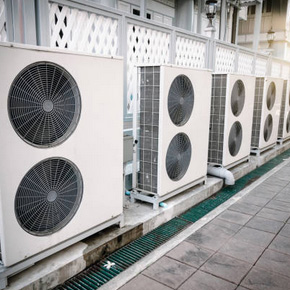
Air Conditioning Drainage Block
Over time, condensation builds up in your AC equipment because of its cooling process. This accumulated byproduct must be drained regularly, or the increased amounts of moisture can damage your air conditioner's components.
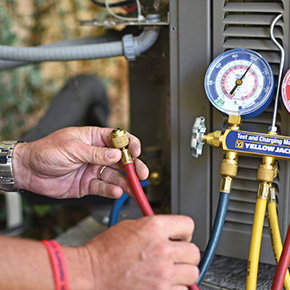
Air Conditioning Refrigerant Leak
Refrigerant is the substance responsible for keeping your home nice and cool in the summer. When refrigerant levels drop due to a leak, it will affect your AC equipment's ability to cool your home. If your HVAC unit isn't blowing cold air, this could be a reason why.
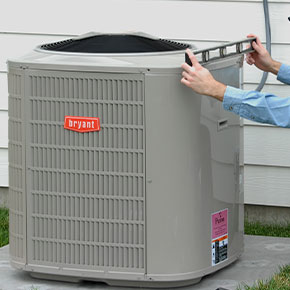
Heater Keeps Running
This is a common AC issue in South Carolina and the U.S. in general. Sometimes this problem is fixed by switching your thermostat to "auto." If that doesn't work, you may have a broken thermostat or a wiring issue that needs to be addressed quickly.
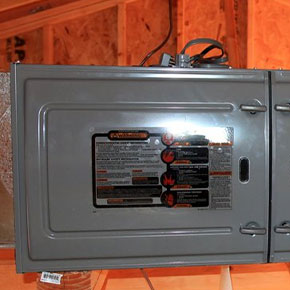
Burning Odors
It's normal for your heater to produce a slight burning smell if it hasn't been used in a while. However, if you are experiencing a persistent burning smell during the summer months when your air conditioning is on, it could be a serious problem. Turn off your HVAC system immediately and call our office as soon as possible so that we may send out a technician to diagnose your problem.
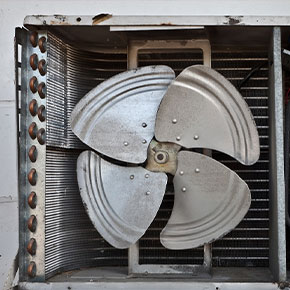
Broken Air Conditioning Compressor Fan
This fan plays an important role in your AC unit's heat transfer process. When your air conditioning fan breaks, your AC equipment won't be able to cool your home off in the summer when it's needed the most.
Our Special Offers
One of our goals as a company is to provide HVAC repair services at fair and competitive prices. In addition, we want you to feel confident about investing in high-quality heating and cooling systems without having to worry a lot about the costs. We make sure to provide honest and accurate quotes and we offer a variety of financing options. We want you to get the best bang for your buck, so here are some special offers.
See Our OfferIf you are experiencing any of the problems above, be sure to hire a professional contractor to fix your issues. For your safety, don't ever try to make HVAC repairs on your own unless you are trained. When the time come to have your air conditioning system repaired, our team of licensed AC technicians will handle all of the hard work on your behalf. That way, you can stay safe and have peace of mind knowing you're in good hands.
Air Conditioning Install in Summerville, SC
Your HVAC system works hard all year long. If you have gone years without much maintenance or AC repair, you probably bought a great HVAC unit. However, with constant use and even normal wear and tear, even the highest-quality HVAC systems are prone to malfunctions. Eventually, it will need to be replaced.
If you need an energy-efficient, reliable cooling system for your home or business, you have come to the right place. We have decades of experience installing new AC systems for our clients and can handle any installation project you have. As a Carrier® Factory Authorized Dealer, we have the most top-rated AC systems available in South Carolina.
At Action Heating & Air Conditioning, we know that buying a new air conditioner and installing it can be a huge source of stress. But when you work with us, it doesn't have to be that way. We have made it our mission to make the AC installation process easy and efficient for our customers. That way, they can focus more on living life and enjoying their home while we work hard on their AC install in Summerville.
Whether you plan to replace a faulty air conditioning system or need a Carrier unit for your new construction home, we have got you covered. We will work with you directly to find the best fit for your home and budget. We are also happy to answer all of your AC installation questions prior to and during your initial service appointment.
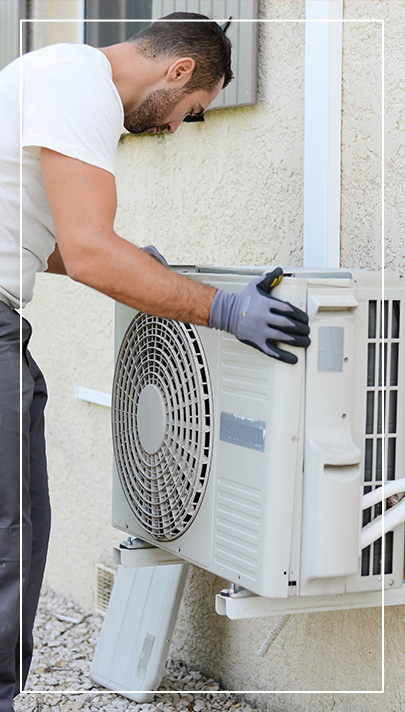
Common Signs That You Need a New AC Install in Summerville, SC
Trying to figure out whether your air conditioner needs to be repaired or replaced can be a tricky decision to make. Most people have a hard time letting things go, and that includes AC units. It can be hard to know when to let go of the old and welcome in the new. To help save you time and make your decision a little easier, keep the following signs in mind. If you find yourself saying, "that sounds like my AC unit," it might be time for a new air conditioning installation.


Strange Noises
Almost all air conditioners make a bit of low-level noise as they warm up and turn off. However, if you hear loud, unusual noises, it might be a sign that your air conditioner's time is coming to an end. Buzzing and rattling noises are often indicators of a loose part. Grinding and whistling noises may mean something more serious is happening. Because these issues won't dissipate over time, it's crucial to have your air conditioner examined if you hear loud, strange noises.

Frequent Repairs
Summerville AC repair is essential for keeping your air conditioner working efficiently. Sometimes, however, it makes more sense from a cost perspective to install a replacement system. This is especially true if your repairs are racking up. Some AC experts suggest using the "$5,000 rule" if you're considering a new AC install. Simply multiply the age of your air conditioner by the costs you have been paying to repair your unit. If that amount is over $5,000, it may make more financial sense to install a new air conditioner rather than pay for expensive repairs throughout the year.

Higher Energy Bills
If you notice that your energy bill has significantly increased in price, it could be a sign that your HVAC unit is struggling to cool your home effectively. Try to be mindful of your air conditioner's cooling cycles. If you notice frequent cycles, even in the summer, it could be the reason for your increased energy bill. In these cases, it's best to have an expert test your system to see if a repair or replacement option is best for your family.

Age of Air Conditioning Unit
This sign is a no-brainer and one of the easiest ways to tell if you need to install a new AC system. On average, your HVAC unit will have a lifespan of 12 to 15 years. If your unit is more than ten years old and doesn't have the "pizzaz" that it once had, it might be time to think about installing a new air conditioning unit.

R-22 Refrigerant
Old air conditioners usually require a type of refrigerant called R-22. This substance is very harmful to the environment and has been all but outlawed on newer HVAC systems. If your AC unit is old enough to require R-22, you should give serious thought to replacing your system with a newer, environmentally friendly solution.
Protecting Your Investment
Your air conditioning system works very hard every day, all year long to keep your home comfy and cool. Machines that work hard year-round are going to require maintenance and ongoing services to stay operational.
As a family-owned and operated HVAC company in Summerville, SC, we know better than anyone how expensive it can be to maintain an AC unit. We know that money doesn't grow on trees. We also understand that finding last-minute resources to fix an air conditioning system can be challenging. That is why we offer extended warranties for your new or existing AC equipment. With an extended warranty from Action Heating & Air Conditioning, you benefit from repairs, replacement, and additional services covered under warranty. That way, you can enjoy your HVAC products as long as possible.

If you're having second thoughts about purchasing an extended warranty, consider these points:
- Generally speaking, HVAC equipment lasts anywhere from 10 to 15 years. However, warranties provided by the factory will often expire before the service life of your cooling unit is over. With an extended warranty, your indoor comfort system is covered even if the factory warranty expires.
- Having an extended warranty on your AC system gives you the chance to project and plan for any HVAC costs. This helps you balance your budget and anticipate expenses so you aren't caught off guard. Having a warranty will also help protect your budget against increases in labor and parts costs due to inflation.
- If you're thinking of selling your home, having an extended warranty may help raise your home's value. You may also be able to transfer your extended warranty to your new home if you choose to do so.
Latest News in Summerville, SC
LIST: Where to see Santa across the Lowcountry this holiday season
Jameson Moyerhttps://www.counton2.com/holiday-fun-guide/list-where-to-see-santa-across-the-lowcountry-this-holiday-season/
CHARLESTON, S.C. (WCBD) – Santa has a jam-packed schedule this holiday season. Are you wondering where to take the kids to see Santa? Below, you’ll find a breakdown of all the areas Santa will be across the Lowcountry.Summerville – Head to Top Dawg Tavern in Summerville on Dec. 20 from 5 p.m. to 8 p.m. and grab some pictures with Santa. Kids are welcome to attend, and there will be live music from 7 p.m. to 10 p.m., with specials running all night.– Children of Summerville can tak...
CHARLESTON, S.C. (WCBD) – Santa has a jam-packed schedule this holiday season. Are you wondering where to take the kids to see Santa? Below, you’ll find a breakdown of all the areas Santa will be across the Lowcountry.
Summerville
– Head to Top Dawg Tavern in Summerville on Dec. 20 from 5 p.m. to 8 p.m. and grab some pictures with Santa. Kids are welcome to attend, and there will be live music from 7 p.m. to 10 p.m., with specials running all night.
– Children of Summerville can take pictures and give Santa their wish list letters at the Old Time Summerville Christmas Celebration on Nov. 28 from 6 p.m. to 8:30 p.m.
Mount Pleasant
– Support local children’s charities and see Santa and Mrs. Clause by attending Winter Wonderland at The Belle Hall Shopping Center in Mount Pleasant. The event will be Dec. 1 from 12 p.m. to 7 p.m.
– All kids can get a free chocolate pop and a photo shoot with Santa at Mt. Pleasant Towne Centre from Nov. 24 to Dec. 24. To see the photo shoot schedule and make reservations, go to https://mtpleasanttownecentre.com/events/photos-with-santa-claus/
– Ahead of the Folly Beach Christmas Parade, citizens can grab photos with Santa Pierview, Pavilion Ballroom, Dec. 9 from 9 a.m. to 11 a.m. There will be ornament-making craft tables and a hot and cold food buffet. To purchase tickets, visit https://www.tidesfollybeach.com/breakfast-with-santa/?utm_source=third_party_listings&utm_medium=calendar_listing&utm_campaign=santa-breakfast
Isle of Palms
– Eat at Rudolph’s pancake buffet and have breakfast with Santa on Dec. 2 in the Tides Ballroom at Wild Dunes Resort from 8:30 a.m. to 10:30 a.m. Call 877-230-9224 to book a reservation.
Cottageville
– Bee City Zoo’s Wonderland of Lights will feature Santa visits from Nov. 22 to Dec. 31. To purchase tickets and see Santa’s schedule, visit https://www.beecityzoo.com/
North Charleston
– Visit with Santa at the City of North Charleston Christmas Festival and Parade at Felix C. Davis Community Center, Dec. 2, 4 p.m. – 8 p.m.
– Santa’s Workshop will be set up at Northwoods Mall in North Charleston on Nov. 22. To reserve your visit or find visitor hours, click here: https://www.shopnorthwoodsmall.com/store/santas_workshop
Charleston
– Santa will be at the Citadel Mall Mon.-Sat. 11 a.m. to 7 p.m. from Nov. 24 through Dec. 24. You can also make reservations and skip the line at citadelmall.net
– Mr. and Mrs. Claus will be at The Charleston Place on the 2nd-floor landing Dec. 2,9 and 16 from 1 p.m. to 4 p.m.
– The Charleston Santa welcomes visitors at The Best Friend Train Museum every weekend between Thanksgiving and Christmas.
Reservations are required; however, admission is free. Hours are 10 a.m. to 6 p.m. except on Dec. 16, 17, and 23, which will be 10 a.m. to 4 p.m.
– Visit with Santa in the library at The Restoration Hotel on Dec. 9 from 10 a.m. to 12 p.m.
– On Christmas Eve, Santa will be at the Crown Ballroom for a breakfast buffet filled with sweet and savory foods. If you want breakfast with Santa, call 843-990-5460 or make reservations online at https://www.opentable.com/r/hotel-bennett-special-events-charleston. Tickets are $82 per adult and $47 for children under 12.
Summerville voters choose Touchberry as new mayor
Madeline Quonhttps://www.postandcourier.com/news/summerville-mayor-race-election-results-november-2023/article_b320ad5e-77f4-11ee-9221-a37b98d3edb7.html
SUMMERVILLE — Russ Touchberry will replace Ricky Waring as the town’s new mayor.Touchberry defeated opponents Dickie Miler and Vickie Fagan with 53 percent of the vote in the Nov. 7 election.“It’s time to get the work done, and I can’t wait to get the work done,” Touchberry said. “That’s what we’ve been looking forward to.”Results are unofficial until certified by election officials later this week.Waring believes Summerville is in good hands as Touchberr...
SUMMERVILLE — Russ Touchberry will replace Ricky Waring as the town’s new mayor.
Touchberry defeated opponents Dickie Miler and Vickie Fagan with 53 percent of the vote in the Nov. 7 election.
“It’s time to get the work done, and I can’t wait to get the work done,” Touchberry said. “That’s what we’ve been looking forward to.”
Results are unofficial until certified by election officials later this week.
Waring believes Summerville is in good hands as Touchberry prepares to replace him.
“I’ve enjoyed working with him on City Council for the last few years. Russ is a thinker, he concentrates on issues and works well with everybody,” Waring said. “I think he’ll do a great job.”
Touchberry, an engineer, has served on Town Council since 2021.
Tiffany Johnson-Wilson won the District 2 seat for Town Council. She beat opponents Bill McIntosh and incumbent Terry Jenkins with 35 percent of the vote.
“I am just so thankful,” Johnson-Wilson said. “I put my heart and soul into this, and I worked day and night for this, seven days a week.”
Richard Waring, the recently retired fire chief, ran unopposed for the District 4 council seat. Incumbent Bob Jackson ran unopposed in District 6.
NORTH CHARLESTON — To continue efforts to become the Coast Guard’s “operational center of gravity” on the East Coast, officials broke ground Jan. 26 on its new $160 million campus.
This 64-acre site along the Cooper River — just south of the former naval base that closed in 1996 — will house an administration building and redesigned 1,100-foot concrete pier.
Construction is expected to begin later this year and be completed in 2026.
“This Charleston campus will have improved infrastructure that translates into more productive personnel and more efficient operations,” said Capt. Neal Armstrong, the commanding officer of facilities design and construction.
The 51,500-square-foot administration building will provide training and conference room space, and additional rooms dedicated to cutter ship support.
Sustainability is a priority, so the new facility will achieve net-zero energy usage and a net-zero carbon footprint, Armstrong said.
The current Pier November will be replaced with a pier more than three feet taller to enhance durability during coastal storms. It will provide utilities to support five national security cutters and a 90-ton crane, which is critical for dockside maintenance, Armstrong said.
During the design and construction phases nearly 60 subcontractors will support the two main contractors on the project, Whiting-Turner Contracting Company and RQ Construction LLC, providing work for nearly 900 people.
Commandant of the Coast Guard Adm. Linda Fagan, who spoke at the groundbreaking ceremony, said every Coast Guard mission begins and ends at a shore facility. When the ships are not at sea, they need a base that can provide necessary maintenance, she added.
The missions conducted at Base Charleston are vital to protecting national security and economic prosperity, Fagan said, adding that the new campus will aid in “lifesaving work,” including patrolling the waters for smuggled narcotics.
Share your photos of Monday’s solar eclipse
Patrick Phillipshttps://www.live5news.com/2024/04/08/heres-what-lowcountry-can-expect-mondays-solar-eclipse/
CHARLESTON, S.C. (WCSC/AP) - Viewers in the Lowcountry are sharing photos of Monday’s solar eclipse, an event that isn’t expected to happen again for 21 years.Send your photos of the solar eclipse by clicking the blue “+ Add Media” button:Monday’s eclipse over the Lowcountry was not as dramatic as a similar eclipse back in 2017 because the Lowcountry was not within the “path of totality,” the strip stretching across North America from Mexico to Canada where spectators will be a...
CHARLESTON, S.C. (WCSC/AP) - Viewers in the Lowcountry are sharing photos of Monday’s solar eclipse, an event that isn’t expected to happen again for 21 years.
Send your photos of the solar eclipse by clicking the blue “+ Add Media” button:
Monday’s eclipse over the Lowcountry was not as dramatic as a similar eclipse back in 2017 because the Lowcountry was not within the “path of totality,” the strip stretching across North America from Mexico to Canada where spectators will be able to see the moon aligned nearly perfectly in front of the sun.
“You wouldn’t even know it happened unless we were to tell you this was going on unless you put on these glasses are able to see it yourself,” Sovine said.
The Lowcountry peaked at about 70% of the sun being blocked by the moon, but because the sun is so bright, that still won’t be enough to cause a huge difference in how bright the sky looks.
People who were in the eclipse’s path saw a twilight for nearly four-and-a-half minutes, nearly twice as long as the 2017 eclipse because the moon is closer to the earth this time around.
Live 5 First Alert Meteorologist Joey Sovine stressed the importance of using safe eye protection during the partial eclipse.
“It’s never safe to look at the sun, whether it’s a day where there’s a solar eclipse or not,” he said. Before relying on any eclipse glasses, spectators should make sure a reputable store sold them and that the product isn’t a knockoff.
Doctors warned of the potential for permanent eye damage from looking at the sun without proper protection and NASA warned people not to take photos of the eclipse with their phones because that could cause permanent damage to the camera.
The peak of the eclipse over the Lowcountry came at about 3 p.m. or so.
Astronomers said the eclipse was expected to end by about 4:25 p.m. when sunlight would be back in full force.
An estimated 44 million people live within the track, with a couple hundred million more within 200 miles.
Experts from NASA and scores of universities are posted along the route, poised to launch research rockets and weather balloons, and conduct experiments. The International Space Station’s seven astronauts also will be on the lookout, 270 miles up.
It will be another 21 years before the United States sees another total solar eclipse on this scale.
Copyright 2024 WCSC. All rights reserved.
Bugs, blood & beatings: Docs reveal claims against Summerville youth facility
Katie Kaminhttps://www.live5news.com/2023/11/30/bugs-blood-beatings-docs-reveal-claims-against-summerville-youth-facility/
SUMMERVILLE, S.C. (WCSC) - Newly obtained documents show dozens of complaints have been filed in recent years against a Summerville youth treatment facility, alleging there are bugs, abuse, dangerously low staffing levels, violent fights and blood and vomit smeared throughout the building.Mary Wilcox’s grandson spent time in that facility, Palmetto Summerville Behavioral Health, earlier this year.“Terror” is how she describes her feelings about the residential facility, which is for children and teens ages 7-1...
SUMMERVILLE, S.C. (WCSC) - Newly obtained documents show dozens of complaints have been filed in recent years against a Summerville youth treatment facility, alleging there are bugs, abuse, dangerously low staffing levels, violent fights and blood and vomit smeared throughout the building.
Mary Wilcox’s grandson spent time in that facility, Palmetto Summerville Behavioral Health, earlier this year.
“Terror” is how she describes her feelings about the residential facility, which is for children and teens ages 7-18 with emotional and behavioral issues.
Her 13-year-old grandson was admitted to the youth residential treatment facility earlier this year.
For weeks, he stayed locked behind the doors of the facility; for weeks he recounted the horror and violence to his grandmother; and for weeks, Wilcox said she fought to get him out.
“[He] was abused in ways that most parents would say would be the worst thing to happen to their child,” Wilcox says.
During phone calls with his grandmother and an in-person visit, he detailed vicious fights, sexual assaults and abuse.
“He was struggling to deal with what was going on, and he attempted to escape,” Wilcox said. “He was handled by a staff member who slammed his head into a chain link fence causing a gash, causing blood to drop down his face.”
Her grandson’s story is not the first troubling one that has been shared. Nearly 200 pages of documents obtained through a Freedom of Information Act request for complaints against the facility in the past few years detail allegations of what some say erupts in the hallways and common areas and what hides, tucked away in patients’ rooms.
The dozens of complaints filed describe alleged bug infestations, inadequate staffing, filthy conditions, overmedicating and a prison-like environment.
One complaint says a staff member attacked a patient.
“On the video, it was observed that a staff member placing [redacted] into a choke hold and then it is observed on camera that same staff member punching [redacted] six times once [redacted] is taken down to the ground,” the complaint states.
Another states a patient was so heavily medicated they fainted. In a different complaint, an employee is accused of grabbing a patient by the shirt, pulling them down and kneeing them in the face.
“It does not surprise me at all,” Wilcox says. “My grandson communicated similar conditions to me. It is very alarming that this happened to my grandson; it’s alarming that children are in the facility still.”
One complaint alleges the facility frequently only has one nurse on duty with 60 patients and was so short-staffed they couldn’t provide proper treatment.
Another states there have been “numerous human rights violations” and claims patients are refused medical treatment and prescriptions.
“Supervisors explicitly tell staff to ‘treat them like prisoners because they are here for punishment’ rather than treating the patients with compassion as they go through treatment,” the complaint states.
Another complaint describes cockroaches and ants crawling around and blood and vomit smeared inside.
“[Palmetto Summerville] should be investigated,” Wilcox says. “They need to be checked out. They need to be monitored, and they need to be held accountable.”
The State Department of Health and Environmental Control is the agency responsible for investigating complaints against health facilities like Palmetto Summerville. It can also penalize them.
“When there is noncompliance with the licensing standards, the facility must submit an acceptable written plan of correction to DHEC that must be signed by the administrator and returned by the date specified on the report of inspection/investigation,” an email from DHEC states. “When DHEC determines that a facility is in violation of any statutory provision, rule, or regulation relating to the operation or maintenance of such facility, DHEC, upon proper notice to the licensee, may impose a monetary penalty, and deny, suspend, or revoke licenses.”
Last month, DHEC investigated two complaints against Palmetto Summerville, but no violations were cited, according to officials. In August, however, the facility was fined $19,000 for nine violations.
“DHEC executed a consent order with the facility in August after it was determined that it was appropriate to impose a civil monetary penalty for violations of Regulation 61-103,” the email from DHEC states.
Some of those violations, documents show, include failing to have a registered nurse immediately accessible by phone and available within 30 minutes, failing to notify DHEC of a serious accident or incident within 24 hours, failing to make sure residents were free from harm and failing to make sure medications were available for administration.
“[Patients] are further traumatized,” Wilcox says. “They are further placed into a downward spiral by being in these facilities.”
That downward spiral and that trauma, she says, prevent any effective treatment for the children who spend time at Palmetto Summerville and similar facilities.
Some studies show that could be right.
One study shows there’s not enough research to know if the interventions — therapy, activities and treatments — inside these facilities are effective or an effective use of money.
“We also don’t know a lot about what the, what treatments they’re actually getting because we don’t necessarily see the day-to-day life of these kids in these facilities,” Roderick Rose, an associate professor at the University of Maryland Baltimore and researcher in the study, says.
A common trend in the facilities: Medication. One study shows about 90 percent of stays at facilities analyzed included an antipsychotic medication, even though only 3 percent of patients were diagnosed with a psychotic disorder.
“You also see just a lot of medicating children,” Rose says.
For her grandson, Wilcox believes the best treatment has been being back home. He’s in school and playing basketball and is doing better. The trauma from the facility still lingers, however, and Wilcox says she prays other children can get the help they need outside of the gates of Palmetto Summerville.
“I am so very grateful that he is one child that escaped being in the situation he was in long,” she says. “Other children, as well, to be rescued, which is a most appropriate word. They need to be rescued from these facilities.”
Norman Bradley, the director of risk management and performance improvement for Palmetto Summerville Behavioral Health released this statement:
Due to HIPAA patient privacy laws, we cannot offer comment on specific patients or their care.
Palmetto Summerville Behavioral Health takes all allegations of abuse seriously and completes full investigations as warranted. Any and all allegations required to be reported to the Department of Health and Environmental Control have been done, and necessary action plans have been implemented to address the issues raised. Recent site visits by DHEC have been positive and have resulted in no findings.
Palmetto Summerville Behavioral Health is a residential treatment facility for girls and boys ages 7 to 18, in need of a highly structured, therapeutic environment. Our patient satisfaction scores reflect the care that is delivered by our compassionate and dedicated team.
Copyright 2023 WCSC. All rights reserved.
Halter to run for town council
Brandon Robertshttps://www.postandcourier.com/journal-scene/community-news/halter-to-run-for-town-council/article_ced4a4c8-b373-11ee-9cf6-fbb28887b5d7.html
A second candidate has announced his intent to seek the seat representing District 3 on Summerville Town Council.Matt Halter, a local business owner and engineer, said he decided to run for office because he believes his resume qualifies him to tackle many of Summerville’s current problems.“I also believe your representative should be elected by you, not appointed by a select few elitists and those currently in power,” he said. “It’s time we had more than just figureheads in our local government &n...
A second candidate has announced his intent to seek the seat representing District 3 on Summerville Town Council.
Matt Halter, a local business owner and engineer, said he decided to run for office because he believes his resume qualifies him to tackle many of Summerville’s current problems.
“I also believe your representative should be elected by you, not appointed by a select few elitists and those currently in power,” he said. “It’s time we had more than just figureheads in our local government – we need rock-solid leaders fighting for the best interests of our town and its taxpayers.”
Halter said that, over time, Summerville’s leadership “has bloated our government to the point of dysfunction” and has “recklessly allowed developers to overrun our town, bringing with them unmanageable traffic and a maze of red tape.”
“This is not leadership; it is a failure to serve the public interest,” he said. “While I support change and growth, the growth Summerville’s leaders approve needs to be in the best interest of our town. Some development can actually add to the value of our town, while apartment home communities, for example, add major traffic concerns, overrun our schools and produce housing that is not affordable, driving up the cost of rent and home ownership.”
A resume provided to the Journal Scene by Halter shows experience in government, the private sector and as a small business owner.
“I’m not an elitist in a line of politicians – I’m a regular citizen,” he said. “It’s time to bring strength and common sense back to our council. It’s time your family’s needs outweigh the wants of a privileged few. This is not about politics as usual; it’s about restoring a government that works for its people and bridges that gap between government and its citizens so that the government is ‘of the people, by the people and for the people. We need a government that listens, acts and delivers. I’m rock-solid and here to ensure Summerville thrives for all its residents.”
Halter has been married to his wife, Donna, for 32 years. She is an elementary school teacher in Dorchester School District 2 and manages the books for their business, Benchmark LDS.
Their son, Matt Jr., is a civil engineer, and their daughter, Lauren, is a registered nurse. Matt and Donna have two grandchildren.
Today's Top Headlines
Matt is a graduate of Stratford High School and The Citadel. He became a registered professional engineer, land surveyor and licensed general contractor. His career began in Charleston, where, as an engineer and stormwater superintendent, he led projects and managed a team of more than 80 employees.
Matt went to work for the town of Summerville in 1996 as the town engineer and public works director. During this time, he wrote the town’s first development standards and founded the South Carolina Association of Stormwater Managers.
Matt ventured into the private sector in 2004, applying his engineering, land surveying and project management experience as the owner and president of Benchmark LDS.
“One of my more notable contributions was the design and construction of the Summerville Miracle League field on South Laurel Street,” he said. “This project wasn’t just about building a field; it was about creating a space where everyone in the community, regardless of their abilities, could come together and enjoy the spirit of the game.”
As one of the founding board members and president of the Summerville Miracle League, Matt, along with a team of citizens, raised more than $500,000 for the field, which was a joint venture between the town and private entities, which he said showcases his ability to “lead, collaborate and deliver.”
He has served on the Dorchester County Transportation Authority and was a multiple-term member of the town’s Commercial Design Review Board.
“In every role, I have demonstrated a consistent commitment to the betterment of Summerville,” he said. “My actions and achievements speak volumes about my dedication, making me not just a candidate for the town council but a true steward of the community’s well-being and future.”
Disclaimer: